Bedroom styling · Textured bedding
Coyuchi Quilts: A Guide to Layering Lightweight Texture
A quilt can do more than add a little warmth. With its stitched surface, easy drape, and quieter weight, it brings dimension to a bed while leaving room for the textures beneath it to be seen. The most inviting arrangements balance that tactile detail with breathable sheets, considered color, and a sense of ease.
Published November 17, 2026
The bed is often the largest uninterrupted plane in a bedroom. Its layers shape the room’s first impression: a smooth sheet catches light differently from a rumpled linen pillowcase; a quilted coverlet introduces a pattern of shadows where a plain duvet might offer only a broad field of color. Add a quilt, and the bed gains another gentle register—one that can feel finished without becoming formal.
That balance is central to relaxed, design-forward bedding. A quilt is usually lighter and less lofty than a comforter, though its warmth depends on its materials, construction, and the climate of the room. Its stitched layers provide texture and a little insulation, while its relatively low profile makes it useful as a top layer, a folded accent, or an extra covering within reach. The aim is not to stack every available textile. It is to choose a few surfaces that work together.
Why a quilt changes the feel of a bed
Quilting creates a landscape of small rises and depressions. Depending on the stitch pattern, the effect may be geometric and crisp or softly irregular. Even in a restrained palette, that relief keeps a bed from looking flat. As daylight moves across the room, seams and padded sections form fine shadows; in the evening, lamplight brings out the fabric’s grain and the quilt’s drape.
A quilt also offers flexibility. On a cool night, it can sit over a sheet and beneath a heavier blanket. In warmer weather, it may be enough on its own, or it can be folded across the lower half of the bed for a light layer that is easy to pull up. During the day, its folded edge gives the bed a composed outline without requiring a perfectly smooth, tightly tucked finish.
The effect is especially useful in rooms where the design favors natural materials and quiet contrasts. Linen, cotton, and other woven fabrics each bring their own character. A quilt’s stitched pattern adds structure; a relaxed sheet brings softness; a decorative pillow can introduce a different scale of texture. Together, these elements create interest through touch and proportion rather than a crowded mix of color.
Begin with the foundation
Before choosing the quilt’s position or fold, consider what lies beneath it. Sheets set the tactile tone of the bed and influence how the layers feel against the skin. Smooth percale has a crisp, matte quality, while sateen tends to feel silkier and reflect more light. Linen has a more visible weave and a relaxed surface that becomes softer with use. None is automatically the right choice; the best foundation is the one that suits your preferred feel, sleeping environment, and care routine.
For a natural, softly textured base, Coyuchi’s Organic Relaxed Linen Sheet Set pairs naturally with a quilted top layer. The set is described as GOTS-certified organic linen, with flax grown in France and linen woven in Portugal. Its relaxed feel softens with use, and the fitted sheet has a full elastic edge and a 15-inch pocket. These details make it a practical foundation for a bed where tactile character matters as much as a polished finish.
The relationship between foundation and top layer is worth considering. A quilt with visible stitching can sit against a simpler sheet without competing for attention. Conversely, a very plain quilt may benefit from a sheet or pillowcase with a more pronounced weave. Aim for difference rather than sameness: a smooth surface beside a nubby one, a matte finish beside a subtle sheen, or a tidy edge next to a soft, unpressed drape.
A simple layering sequence
A composed bed is often easier to make when its layers have distinct jobs. Think of the arrangement as a small sequence, beginning with the pieces closest to the sleeper and ending with the layer that gives the bed its visible shape.
- Start with sheets. Choose a material and hand-feel that suit the sleeper and the season. Smooth, breathable sheets provide a calm backdrop for more textured layers.
- Add the everyday blanket or duvet. This is the primary warmth layer. Its weight and loft help determine whether the quilt should sit fully on top or be folded at the foot.
- Place the quilt with intention. Pull it up for a clean, continuous surface, or fold it down to reveal the bedding beneath. A shorter fold can make the bed feel casual; a broader, even fold reads more tailored.
- Finish with pillows sparingly. Sleeping pillows do the practical work. One or two shams or decorative cushions can add height and texture, but leave enough of the quilt visible for its pattern to register.
This order is a guide, not a rule. In a warm bedroom, a quilt may be the main covering, with no duvet underneath. In a colder climate, it may work as a flexible extra layer. The useful question is how each piece contributes: warmth, comfort, color, or visual texture. If two layers perform the same role and create unnecessary bulk, one may be better folded nearby rather than placed on the bed.
Fold, spread, or drape?
The quilt’s placement changes the proportions of the room. Spread across the bed, it becomes the dominant surface and gives the arrangement a unified appearance. This works well when the quilt’s color and stitch pattern are meant to lead, or when the rest of the bedding is restrained. Let the sides fall naturally, checking that the drop is balanced from one side to the other.
Folded at the foot, a quilt behaves more like a band of texture. The fold exposes sheets and blankets, creating a visible sequence of materials from top to bottom. A single broad fold feels clean and architectural; a softer double fold can look more informal. Keep the fold wide enough to read clearly from the doorway, but not so thick that it becomes a bulky mound.
A diagonal drape can feel spontaneous, but it is most effective when the rest of the room is calm. In a bed already carrying patterned pillows, embroidered details, and several contrasting colors, a diagonal arrangement may add visual noise. When the palette is quiet, however, a loose drape can lend an inhabited quality—a suggestion that the room is made for use, not simply display.
Consider the scale of the bed as well. A small folded quilt can disappear on a king-size mattress, while an oversized fold may overwhelm a narrow bed. Step back and look at the whole room, not just the textile at arm’s length. The quilt should feel connected to the mattress, headboard, and surrounding furniture rather than like a separate decoration placed on top.
Color, contrast, and the quiet palette
Color provides one of the simplest ways to make bedding feel deliberate. A tonal arrangement—ivory with warm white, flax with sand, or pale gray with a deeper charcoal—lets texture do most of the talking. Small differences in shade keep the bed from reading as a single block, while the limited palette supports a restful atmosphere.
For more definition, use a quilt that contrasts gently with the sheets. A natural flax-colored quilt over pale bedding brings warmth without a sharp boundary. A deeper neutral can anchor light sheets and pillowcases, especially in a room with dark wood or black accents. If the quilt has a pronounced stitched pattern, a quieter color can keep that detail from feeling busy.
Pattern mixing is possible, but scale matters. A small, regular quilt stitch can work with a broad stripe or a larger pillow motif because the patterns occupy different visual registers. When patterns have similar scale and contrast, they may compete. Keep one surface dominant and allow the others to recede, or separate them with an unpatterned sheet layer.
A few restrained accents can connect the bedding to the rest of the room. A ceramic lamp, a wood bedside table, or a curtain in a related neutral can echo the bed’s palette without matching it exactly. The goal is continuity, not uniformity. Natural materials often carry subtle variation from piece to piece, and that variation is part of what makes a room feel collected rather than staged.
Texture is a form of detail
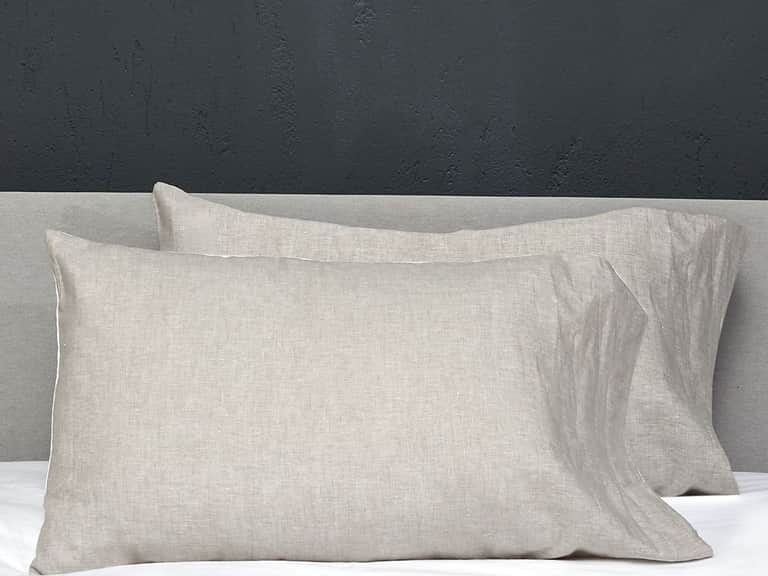
When colors are quiet, the hand and surface of each fabric become more visible. A quilt’s raised stitching can be balanced by the fine grain of linen or the smoothness of cotton. A linen pillowcase, for example, offers a relaxed texture that makes a neatly arranged quilt feel less rigid. The contrast can be subtle, but it gives the eye a reason to move from one layer to the next.
Avoid adding texture simply for its own sake. Too many pronounced surfaces can make a bed feel heavy, both visually and physically. Instead, identify one or two focal textures and let the rest provide contrast. If the quilt has deep quilting or a strong geometric design, choose quieter sheets and keep decorative pillows simple. If the quilt is nearly plain, a nubby pillow cover or a more visibly woven sheet can supply dimension.
Texture also changes with use. Natural fibers may soften, crease, or develop a more relaxed drape over time. That evolution can complement the lived-in character of a bedroom. It does not mean neglecting care: follow the specific care instructions for each piece, especially when combining textiles that require different washing or drying conditions.
Seasonal adjustments without a full redesign
A quilt makes seasonal changes straightforward. In warmer months, use it as the top layer or fold it down when the room is hot. Choose breathable sheets and avoid piling on extra cushions that serve no practical purpose. The result is lighter in feel and appearance, while the quilt still gives the bed a finished edge.
As temperatures fall, keep the same palette and add warmth beneath the quilt with a blanket or duvet. This preserves the room’s visual identity while changing how the bed functions. A quilt at the foot can remain within easy reach for a chilly evening without forcing the whole bed to become a heavy stack. This kind of adaptable layering is often more comfortable than relying on one very thick covering throughout the year.
Seasonal color shifts can be modest. A warmer-toned pillowcase, a deeper throw, or a quilt folded more prominently may be enough to make the room feel attuned to the season. Keeping the foundation consistent reduces the need for a complete changeover and lets each layer serve more than one purpose.
Care that protects the arrangement
Good styling begins with pieces that are comfortable to maintain. Check the care label before washing a quilt; fiber content, fill, stitching, and finish all affect how it should be cleaned. Use the recommended cycle and drying method rather than assuming that every quilt can be treated like a sheet. When possible, make sure the piece is thoroughly dry before folding or storing it.
Between washes, ordinary habits can help keep bedding fresh. Air the room, smooth or shake out layers when making the bed, and rotate how a quilt is folded so that it does not remain creased along one line. If the quilt is used as a decorative accent most days, placing it where it is less exposed to spills, pets, and heavy wear may help preserve its appearance.
Storage matters when the quilt is out of season. Fold it loosely and store it in a clean, dry place, avoiding damp areas and heavy objects that can compress the fill. Follow the maker’s guidance for long-term storage, and give the quilt room to breathe rather than sealing it away while it is still warm or damp.
A bedroom that feels finished, not overworked
The appeal of a quilt lies partly in what it does not demand. It can bring a bed into focus without requiring a dramatic pattern or elaborate styling. A quiet color, visible stitching, and a thoughtful fold may be all the room needs. The rest can remain simple: breathable sheets, pillows chosen for comfort, and enough open space for the bed’s textures to stand out.
When styling a Coyuchi-inspired bedroom, treat the quilt as one part of a broader conversation among fibers, finishes, and light. Let the sheets establish comfort, use the quilt to add a stitched surface and flexible warmth, and keep decorative accents in proportion. A carefully layered bed should invite someone to climb in—not merely admire it from the doorway.
Begin with the materials you enjoy living with. Notice how a quilt falls over the mattress, how its color changes in morning light, and whether its weight suits the room’s temperature. Then adjust one layer at a time. The result is not a fixed formula but a bedroom that feels composed, tactile, and ready for everyday rest.